Federalist No. 2
Agreement and negotiations.
Any agreement reflects a balance of power. Both words come from the word "talk," and rightly so. In the sense that any conversation is an attempt to reach some kind of agreement, whether it's a shared opinion or at least a general understanding of a topic. The balance of power is a fairly broad topic. It may seem that one side often has far more power and can therefore simply give orders. This may be true psychologically, but not technically. If the other side truly had disproportionately more power, they wouldn't talk; they would simply physically do whatever they wanted.
Imagine two animals glaring at each other and then walking away. That's an agreement, as I understand it. Size doesn't matter. The fact that a wasp is a million times smaller than a human doesn't deprive it of the ability to harm, frighten, or force a retreat, even if it's defending a hive tens of meters away.
A agreement is most powerfully cemented by common interest. Not specific terms, but the very need to agree on a topic. Radically better terms offered by one party don't lead to the collapse of a contract. Almost everything collapses simply because people drift apart like ships at sea.
In normal jurisdictions, poorly drafted contracts are almost never a problem; the only issue is that they're rarely read. The real problem is that the contract implies some kind of pressure on all parties, and one party backs out because there was only an illusion of such pressure.
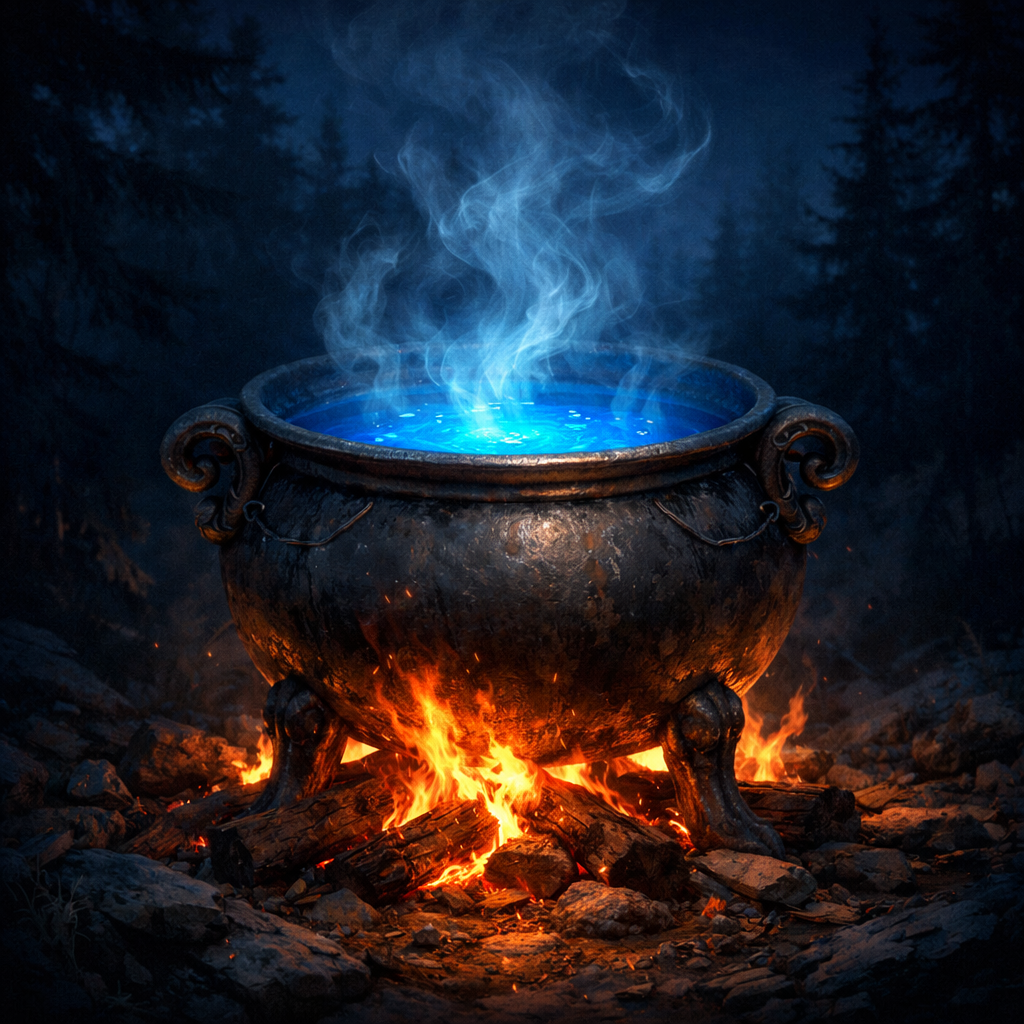
That's why a cauldron is needed. In general, many things can be viewed as an alchemical cauldron of transformation. For example, a bathroom is a cauldron with an emphasis on water, a kitchen on fire, and a living room on air. A cauldron has two aspects: the cauldron itself, its bottom and walls, which must be sealed, and the fire beneath, which accelerates and initiates chemical reactions. Fire is any energy, be it grass for sheep, oil for cars, or money for an organization. But the mere existence of a resource doesn't immediately mean a user will appear. A cauldron, in the context of an organization, signifies a certain bowl in which people are held for serious reasons, so that they can only leave after evaporating from excess energy.
A good agreement, then:
1. We divide the pie (fire, energy, money, some metabolic basis for existence).
2. The division is properly balanced so that participants can come, go, and change their share size in response to new circumstances without destroying the cauldron (the potion is boiling).
3. The agreement itself, by which we divide, is structured so that while the pie is large, dispersing is only possible for an emergency reason (the sides and bottom of the cauldron are good).
4. Once everyone has "fed their fill" of the pie within the limits outlined in the agreement, we can disperse and close the agreement due to success.
Author: Light